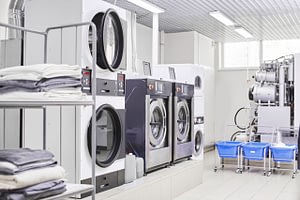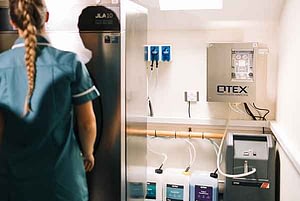
Nature’s most powerful disinfectant is set to play a major role in the battle against superbugs following clinical trials in Scotland. Microbiological tests at an Aberdeen NHS hospital have proved that ozone is more effective than traditional wash processes against dangerous bacteria in dirty laundry – a common source of cross infection.
The tests were conducted at Woodend Hospital following lengthy trials of a revolutionary laundry system that injects ozone into the drums of washing machines. A team of microbiologists compared infected laundry washed by the new system and by a conventional washer. They were particularly interested in the system’s effectiveness against Clostridium difficile. Their tests coincided with the first year of mandatory surveillance for Clostridium difficile associated disease (CDAD) in Scotland.
The bug is now a bigger killer than MRSA and has been proved to survive high temperature thermal disinfection wash processes recommended by the NHS. But it is destroyed by the ozone system, which is known as OTEX. After the Woodend tests, microbiologists concluded: ‘Overall, the OTEX system produced a significantly better end wash in heavily fouled personal laundry for C. difficile, with complete elimination.’ Now, Woodend has decided to invest in the system and will become the first NHS hospital in Scotland to use ozone as an alternative to thermal disinfection.
Ozone is 3,200 more powerful than chlorine bleach and occurs naturally during thunderstorms when lightning changes the make-up of oxygen. The clean, fresh smell that lingers after a storm is, in fact, ozone. The OTEX system recreates the thunderstorm effect using electrical arcs. The ozone it produces is injected into the wash process and instantly kills bacteria and viruses before safely reverting back to oxygen.
OTEX is the result of a four-year, £3 million development programme by leading UK commercial laundry equipment distributor JLA. The company’s Ardee division is a major Scottish supplier.